Welcome to the wild world of dramatic monologues, where one character holds the stage hostage with nothing but their thoughts and a flair for the dramatic! It’s like reality TV but with fewer plot twists and much more existential angst.
Dramatic monologues are the Shakespearean selfies of literature, capturing a moment of inner turmoil or clarity that resonates with audiences. These powerful pieces not only distinguish themselves from other poetry forms but also engage viewers in a deeply personal way, pulling them into the character’s emotional whirlpool.
Understanding Dramatic Monologues
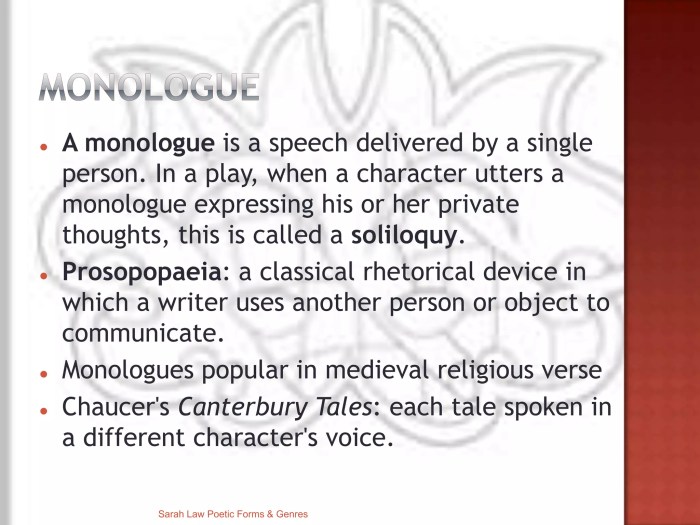
Dramatic monologues are a unique and powerful form of poetry that allows a single speaker to express deep emotions or thoughts, often revealing their inner conflicts and motivations. These monologues serve as windows into the character’s psyche, providing insights that can resonate with audiences on multiple levels. The significance of dramatic monologues in literature lies in their ability to convey complex emotions, engage audiences, and create tension within a narrative framework.The characteristics that distinguish dramatic monologues from other forms of poetry include their structure, voice, and purpose.
Unlike traditional lyric poems that often explore personal feelings in a more abstract manner, dramatic monologues are written as a speech delivered by a specific character. This format allows the speaker to directly address an implied audience, creating a sense of immediacy and intimacy. Additionally, the use of vivid imagery and compelling language enhances the dramatic effect, pulling the audience deeper into the character’s experience.
Characteristics of Dramatic Monologues
Understanding the defining features of dramatic monologues is essential for appreciating their impact. These characteristics can be categorized as follows:
- Single Speaker Perspective: The entire monologue is delivered by one character, providing a deep dive into their thoughts and emotions without interruption.
- Imagined Audience: The speaker often addresses an audience that is not physically present, which adds layers to the narrative and provokes curiosity.
- Emotional Intensity: The monologue typically conveys heightened emotions, allowing for a cathartic experience for both the speaker and the audience.
- Character Development: Dramatic monologues reveal critical aspects of the character’s personality, motivations, and conflicts, which helps in shaping the overall narrative.
- Contextual Setting: The setting and situation are often implied rather than explicitly stated, requiring the audience to engage their imagination to fill in the gaps.
The impact of dramatic monologues on audience engagement in plays is profound. They serve as pivotal moments that can shift the narrative, build suspense, or provide critical exposition. When performed effectively, these monologues can captivate audiences, drawing them into the emotional landscape of the character’s experience.
“Dramatic monologues transform the stage into a confessional, where secrets spill and truth reigns.”
Through the exploration of a character’s innermost thoughts, dramatic monologues not only enhance the storytelling but also allow the audience to reflect on their own experiences, forging a deeper connection with the material presented.
Notable Examples of Dramatic Monologues
Dramatic monologues have the unique ability to capture the essence of a character’s psyche, often illuminating their innermost thoughts in a way that dialogues simply cannot. These monologues serve as a window into the soul, showcasing a blend of emotion, conflict, and sometimes a sprinkle of theatrical flair. Let’s dive into a selection of notable examples that have made a lasting impact in literature and theater.
Classic Dramatic Monologues
Classic works are a treasure trove of dramatic monologues that have withstood the test of time. These pieces not only highlight the depth of human experience but also reflect the cultural and historical contexts of their creation. Here are some quintessential examples:
-
“To be, or not to be: that is the question.”
-from
-Hamlet* by William ShakespeareThis iconic line delves into existential themes of life and death, showcasing Hamlet’s internal struggle and philosophical musings.
-
“O, how this spring of love resembleth the uncertain glory of an April day!”
-from
-The Passionate Pilgrim* by William ShakespeareIn this instance, Shakespeare captures the ephemeral nature of love, comparing it to the unpredictable weather of spring.
-
“I am no bird; and no net ensnares me.”
-from
-Jane Eyre* by Charlotte BrontëThis powerful declaration by Jane expresses her fierce independence and desire for freedom in a repressive society, addressing themes of gender and societal constraints.
Contemporary Dramatic Monologues
The landscape of contemporary theater has introduced a plethora of dramatic monologues that resonate with modern audiences. These selections often tackle current issues while reflecting personal experiences. Here are notable examples that showcase the themes and artistry of modern playwrights:
-
“I am not a dime a dozen! I am Willy Loman, and you are not!”
-from
-Death of a Salesman* by Arthur MillerIn this poignant moment, Willy Loman confronts his identity and the American Dream, embodying the struggle for self-worth amidst societal pressures.
-
“We are all in the gutter, but some of us are looking at the stars.”
-from
-Lady Windermere’s Fan* by Oscar WildeThis witty proclamation reflects hope and aspiration, even when faced with dire circumstances, emphasizing the duality of human experience.
-
“It’s not about what you deserve; it’s about what you’re willing to sacrifice.”
-from
-Sweat* by Lynn NottageThis monologue highlights themes of economic hardship and personal sacrifice, illustrating the gritty reality of working-class struggles.
Playwrights and Their Styles
Dramatic monologues can often be traced back to the distinctive styles of their creators. Here’s a look at some well-known playwrights and how their unique approaches shape their use of monologues:
- William Shakespeare: Master of the soliloquy, Shakespeare’s characters often engage in introspective speeches that reveal their desires and conflicts, blending poetic language with profound insight.
- Arthur Miller: Known for his realistic approach, Miller’s monologues frequently explore themes of identity and morality, using the characters’ internal dialogues to reflect societal issues.
- Tennessee Williams: Williams’s characters often reveal their vulnerabilities through lyrical and emotionally charged monologues, capturing the complexities of human relationships and desires.
The Role of Dramatic Monologues in Poetry Playscripts
Dramatic monologues serve as powerful tools within poetry playscripts, allowing characters to plunge into their inner thoughts and emotional landscapes, giving voice to their deepest fears, aspirations, and existential musings. Think of them as the soul’s solo on a stage, where each word is a note in a symphony of feelings that resonates long after the curtain falls. Incorporating dramatic monologues into poetry playscripts requires a delicate balance of emotion, rhythm, and thematic consistency.
They are typically presented as extended speeches by a single character, creating a direct line of communication between the character and the audience. This format invites spectators to witness the character’s internal struggles and dilemmas, fostering a richer understanding of the narrative.
Framework for Writing an Original Poetry Playscript
Designing a poetry playscript that effectively utilizes dramatic monologues can be as intricate as crafting a soufflé—fluffy, light, and oh-so-delicate! Here’s a structured approach to ensure your script rises to the occasion:
1. Character Development
Craft detailed character profiles. Understand their motivations, backstories, and emotional triggers.
Example
A tormented artist reflecting on their past could reveal layers of regret and hope.
2. Theme Identification
Identify the overarching themes that will bind the monologues together. Themes such as love, loss, identity, or conflict can guide the emotional tone.
Example
Exploring the theme of identity could lead to rich monologues about self-discovery.
3. Monologue Structuring
Write each monologue with a clear emotional arc. Begin with a setting of tension, build up to a climax of revelation, and conclude with a reflective resolution.
Example
A monologue might start with a character expressing fears about failing in life, escalating into a passionate plea for redemption.
4. Rhythmic Flow
Incorporate poetic devices such as meter and rhyme to enhance the musicality of the dialogue. This can transform a simple speech into a captivating performance.
Example
Using iambic pentameter can give a Shakespearean vibe, perfect for drama!
5. Interplay Among Characters
Strategically place monologues amidst dialogues or actions to create contrast and enhance emotional impact.
Example
A character’s reflective monologue may follow a chaotic group scene, providing insight and introspection.
“A monologue is not merely a speech; it is a window into the soul.”
Emotional and Thematic Depth in Playscripts
Dramatic monologues enrich playscripts with profound emotional and thematic depth, transforming characters from mere actors into complex human beings. This depth offers audiences a deeper emotional engagement, as they can relate to the personal struggles and triumphs articulated in the monologues.The emotional resonance stems from the ability of monologues to convey vulnerability. They allow characters to express feelings in their rawest form, often illuminating hidden truths that resonate universally.
For instance, a monologue about grief can evoke tears from an audience member who has faced similar loss, creating a shared experience that transcends individual stories.Thematic depth is enhanced as monologues can encapsulate the core message of the play within a single character’s perspective. This encapsulation often serves as a thematic anchor, guiding the audience through the narrative’s complexities. For example, a monologue about war may not only express the horrors of battle but also explore themes of sacrifice, heroism, and the futility of conflict, leaving the audience with poignant questions long after the final bow.Ultimately, dramatic monologues elevate poetry playscripts from mere performance to profound experiences, breathing life into words and engaging the hearts and minds of all who dare to listen.
Ultimate Conclusion
In conclusion, dramatic monologues are the emotional rollercoasters of the literary theme park, taking us on thrilling rides through the characters’ minds. Whether they leave us laughing, crying, or contemplating our life choices, they undeniably add richness and depth to both poetry and playscripts. So next time you find yourself alone on stage, remember: a dramatic monologue might just be your ticket to fame!
Questions Often Asked
What is a dramatic monologue?
A dramatic monologue is a speech delivered by a character to express their thoughts and emotions, often revealing their inner conflicts and personality.
How do dramatic monologues differ from other poetry?
Unlike other poetry forms, dramatic monologues are typically written from a single character’s perspective, focusing on their internal dialogue rather than a conversational exchange.
Can dramatic monologues be used in modern theater?
Absolutely! Many contemporary plays feature dramatic monologues to explore characters’ psychological depth and engage the audience with their stories.
What role do dramatic monologues play in character development?
They provide insight into a character’s thoughts and emotions, helping audiences understand their motivations and conflicts more deeply.
Are there famous dramatic monologues I should know about?
Yes! Famous examples include Hamlet’s “To be or not to be” and Robert Browning’s “My Last Duchess,” which showcase the power and depth of this form.