Welcome to the theatrical wonderland of Shakespearean plays where love is tangled, power is wrestled, and betrayal lurks behind every corner with the stealth of a cat in a Shakespearean hat! These timeless masterpieces dive deep into human emotions, showcasing everything from the soaring heights of passion to the gut-wrenching lows of treachery.
Within these classic texts, Shakespeare brilliantly employs poetic devices, intertwining lyrical beauty with dramatic flair. As we explore the twists and turns of his major themes, we’ll see how they resonate even today, proving that the quill is mightier than the sword, and perhaps even your Wi-Fi signal.
Analysis of Major Themes in Shakespearean Plays
Shakespeare’s works are a treasure trove of recurring themes that resonate through time and space, echoing the complexities of human experience. With a pen dipped in the ink of emotion, he explored the fabric of love, betrayal, and power, which are as relevant in today’s world as they were in the Elizabethan era. Each theme unfolds like a rich tapestry, woven with the threads of character and circumstance, revealing insights into the human condition that continue to captivate audiences.One of the most significant themes found in Shakespeare’s plays is love, portrayed in its myriad forms, from passionate romance to tragic obsession.
In “Romeo and Juliet,” Shakespeare encapsulates youthful love and its heart-wrenching consequences, as Juliet declares,
“My only love sprung from my only hate!”
This juxtaposition of love and hate illustrates the tumultuous nature of romantic relationships, particularly against the backdrop of family feuds. Similarly, in “A Midsummer Night’s Dream,” love is depicted as a capricious force, with the enchantment of Puck leading to hilarious misunderstandings and chaotic love triangles. The theme of love not only reflects the intimate struggles of characters but also serves as a commentary on the societal norms of courtship and marriage in Elizabethan society.
Betrayal and Its Consequences
Betrayal emerges as a potent theme in Shakespeare’s repertoire, revealing the dark corners of human relationships. The treachery of Iago in “Othello” exemplifies betrayal’s devastating impact, as he manipulates Othello into believing that Desdemona is unfaithful. Shakespeare highlights this through Othello’s anguished lament:
“O, the more angel she, and you the blacker devil!”
This statement underscores the destructive power of deceit and the tragic outcomes that ensue. The betrayal extends beyond personal relationships to encompass political intrigue, as seen in “Julius Caesar,” where Brutus’s betrayal of Caesar serves not just as a personal affront but as a catalyst for civil discord. These portrayals resonate deeply within the Elizabethan context, where loyalty and honor were paramount, and they continue to echo in modern narratives of trust and disloyalty.
The Nature of Power
Power dynamics play a crucial role in Shakespeare’s exploration of human motivation and morality. The quest for power often leads characters to moral decay, as illustrated in “Macbeth.” The titular character’s ambition drives him to murder King Duncan, leading to his own downfall. Macbeth’s chilling realization,
“I am in blood, stepped in so far that should I wade no more,”
reflects the inescapable consequences of his actions and the corrupting influence of unchecked ambition. Similarly, in “King Lear,” the struggle for power among Lear’s daughters reveals the fragility of familial bonds and the chaos that ensues when authority is misused. This theme of power not only reflects the political atmosphere of Shakespeare’s time, marked by monarchy and rebellion, but also invites audiences to question the values that underpin authority and governance in contemporary society.These themes of love, betrayal, and power are not mere relics of the past but timeless lenses through which we can examine our own lives and the world around us.
Shakespeare’s brilliance lies in his ability to weave these complex themes into narratives that resonate with our deepest fears and desires, reminding us that while the costumes may change, the heart of humanity remains strikingly similar.
The Role of Poetry in Shakespearean Plays
Shakespeare’s plays are like a treasure chest of poetic gems, each line a shiny bauble that glitters with meaning. His deft use of language elevates drama into a dance of words where emotions pirouette and motivations collide. From the grand soliloquies to the witty banter, poetry weaves a rich tapestry that enhances storytelling, allowing audiences to savor the depth of human experience as they would a fine wine—preferably without the hangover.Shakespeare skillfully incorporates poetic devices into his plays, using metaphor, simile, alliteration, and rhythm to create an emotional landscape that resonates deeply with his audience.
By employing iambic pentameter, he gives his characters a natural flow of speech that feels both elevated and relatable. This unique blend of poetic form and dramatic content not only propels the narrative forward but also invites the audience to engage their imaginations and emotions. The impact of these techniques is palpable; they shape the tone, highlight character development, and set the stage for pivotal moments.
Examples of Soliloquies and Dialogues
Soliloquies serve as windows into the souls of Shakespeare’s characters, revealing their innermost thoughts and feelings in a way that dialogue often cannot. These poetic monologues encapsulate character conflicts and emotional turmoil, allowing audiences to connect with their struggles on a personal level. The following examples illustrate how Shakespeare masterfully fuses poetry and drama:
- Hamlet’s “To be or not to be” Soliloquy: In this famous contemplation of existence, Hamlet employs imagery and rhetorical questions to explore the depths of despair and the human condition. The rhythm and weight of the words mirror his internal conflict, creating a moment of profound introspection.
- Juliet’s Balcony Scene: In “Romeo and Juliet,” Juliet’s poetic declarations of love are characterized by rich metaphors (“My bounty is as boundless as the sea”). The elegant flow of her words captures the intoxicating nature of young love and contrasts with the harsh realities of their feud.
- Macbeth’s “Tomorrow, and tomorrow, and tomorrow” Speech: Here, Macbeth reflects on the inevitable passage of time and the futility of life. The repetition and cadence create a haunting melody that underscores his despair, leaving audiences with a sense of tragedy and loss.
Poetic Elements in Different Plays
The use of poetic elements varies across Shakespeare’s works, each play presenting a unique emotional palette. By comparing these techniques, we can appreciate how they enhance the narrative and evoke feelings. The following table Artikels key poetic elements and their emotional effects in selected plays:
| Play | Poetic Element | Emotional Effect |
|---|---|---|
| Hamlet | Soliloquy | Introspection and existential dread |
| Romeo and Juliet | Imagery | Passionate longing and youthful exuberance |
| Macbeth | Symbolism | Despair and the corrupting nature of ambition |
| A Midsummer Night’s Dream | Alliteration and Rhyme | Whimsy and comedic tension |
| Othello | Metaphor | Jealousy and emotional turmoil |
Shakespeare’s ability to blend poetic elements with dramatic narrative not only enhances the depth of his characters but also creates an immersive experience that resonates with audiences across centuries. Such is the magic found in the art of his words, where even the most tragic of tales can be laced with lyrical beauty.
Characters and Their Development in Shakespearean Plays
Shakespeare’s characters are not just mere figments of imagination; they are complex beings that leap off the page with their intricate motivations and transformations. Each character embodies a slice of humanity, grappling with love, ambition, betrayal, and redemption. By diving into their arcs, we uncover the essence of what it means to be human, even if that means engaging in a bit of melodrama or existential pondering over a poisoned goblet.The development of characters in Shakespearean plays is a grand theatrical tapestry woven with threads of ambition, love, vengeance, and often, a sprinkle of folly.
Each character is a piece in the puzzle that propels the narrative forward, their relationships acting as the glue that binds the story together. Let’s take a closer look at some of the prominent figures and their journeys, illustrating how their choices shape their destinies and the fates of those around them.
Character Arcs and Key Relationships
Understanding the dynamics of character relationships is crucial as they often act as catalysts for change within the narrative. The interactions between characters can spark conflicts, ignite passions, and even foster alliances. Here’s a look at key characters in selected Shakespearean plays, their traits, and significant decisions that illustrate their growth:
| Character | Traits | Key Decisions | Growth Illustration |
|---|---|---|---|
| Hamlet | Melancholic, contemplative, indecisive | Feigned madness, delay in avenging his father’s death | From indecision to action as he ultimately embraces fate. |
| Lady Macbeth | Ambitious, ruthless, guilt-ridden | Encouraged Macbeth to murder Duncan | Descends into madness, showcasing the cost of ambition. |
| Othello | Trusting, noble, insecure | Believed Iago’s lies about Desdemona | Transformation from dignified leader to tragic figure consumed by jealousy. |
| Portia | Intelligent, resourceful, loyal | Disguised herself as a male lawyer to save Antonio | From a wealthy heiress to a clever savior, challenging gender norms. |
| King Lear | Proud, stubborn, ultimately wise | Divided his kingdom based on flattery | Transforms from a foolish monarch to a man humbled by suffering. |
“All the world’s a stage, and all the men and women merely players.”
Through their journeys, these characters engage with each other in ways that reveal their inner conflicts and desires, propelling the narrative toward its climax. The relationships between them often reflect Shakespeare’s keen insight into human nature, showcasing the humor, tragedy, and ultimate complexity of the human experience. Each character’s transformation is a testament to the depth of Shakespeare’s understanding of human psychology, making his works timeless and universally relatable.
Final Wrap-Up
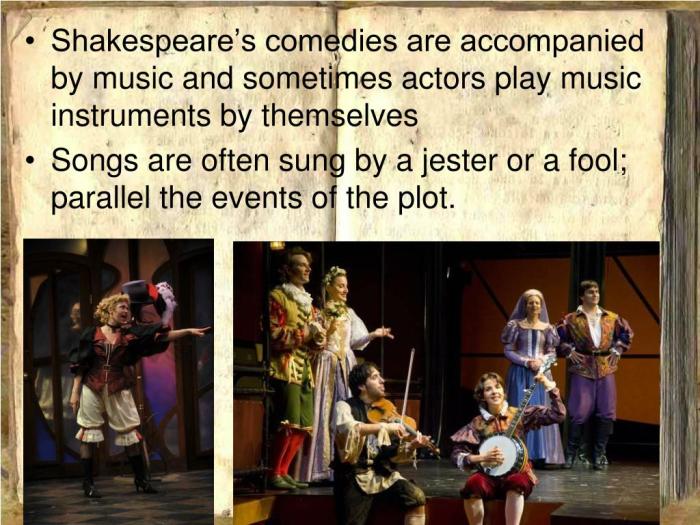
And so, dear audience, as the curtain falls on our exploration of Shakespearean plays, we are left with a profound appreciation for the depth of emotion and the complexity of characters that have entertained and provoked thought for centuries. Whether it’s the tragic deaths or comedic misunderstandings, Shakespeare’s works remind us that life, much like a good play, is filled with dramatic turns and unexpected moments—so always keep your popcorn ready!
Essential FAQs
What are the major themes in Shakespearean plays?
Major themes include love, betrayal, power, ambition, and fate, often explored through complex character interactions.
How does Shakespeare use poetry in his plays?
Shakespeare incorporates poetic devices like meter and metaphor, enriching the dialogue and enhancing emotional impact.
What is a soliloquy?
A soliloquy is a speech where a character speaks their thoughts aloud, revealing their inner feelings to the audience.
Which character is considered the most complex in his works?
Characters like Hamlet are often seen as the most complex due to their moral dilemmas and psychological depth.
Why are Shakespearean plays still relevant today?
The themes of love, betrayal, and the human condition resonate across time, making them timeless and relatable.