Spoken word poetry, where words leap from the page to the stage, invites us to experience language in a dazzling new light. This vibrant art form has evolved from the rich oral traditions of storytelling, transforming simple words into powerful performances that resonate with audiences. With themes ranging from love and identity to social justice, spoken word poetry captivates listeners and challenges them to reflect on the world around them, making it an essential part of contemporary artistic expression.
It’s not just about the lines you read; it’s the rhythm, the emotion, and the passion that dancers upon the tongue and stirs the heart. This dynamic craft blends performance with poetry, creating an electric atmosphere that engages both the poet and the audience in a shared experience of creativity and connection.
The Essence of Spoken Word Poetry

Spoken word poetry has danced through the ages, evolving like a chameleon in a kaleidoscope, reflecting the rhythms and cadences of human experience. It thrives on the intimate connection between performer and audience, transforming written word into a vibrant, living performance. This art form has roots reaching back to the oral traditions of ancient cultures, where storytelling and poetry were shared in communal gatherings, often accompanied by music and movement.
Over time, spoken word has embraced contemporary themes, becoming a powerful medium to express social issues, personal struggles, and the richness of identity.
Historical Roots and Evolution
Spoken word poetry traces its origins to ancient oral traditions, where words were not merely read but performed, creating a deep emotional resonance. As civilizations evolved, so did the mediums of expression. The Harlem Renaissance in the 1920s saw a resurgence of spoken word, with poets like Langston Hughes and Claude McKay taking the stage to address themes of race and identity.
The Beat Generation in the 1950s introduced a rebellious energy, with figures like Allen Ginsberg and Jack Kerouac, who infused jazz and performance into their work. By the late 20th century, spoken word had entered mainstream consciousness through poetry slams and festivals, becoming a platform for diverse voices and urgent social commentary.
Significance of Performance
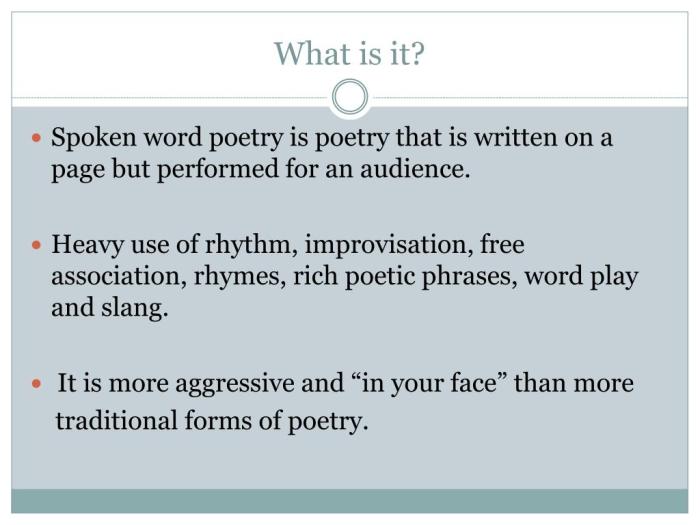
The performance aspect of spoken word poetry transforms the experience, allowing poets to convey their message through voice, body language, and emotion. Unlike traditional poetry, which often remains confined to the page, spoken word engages the audience in a visceral manner. The delivery can be just as important as the content; the rise and fall of a voice, the pause for effect, and even the poet’s physical presence contribute to the storytelling.
This dynamic interaction fosters a shared experience, breaking down barriers and inviting listeners to connect with the words on a deeper level.
Themes and Topics in Spoken Word Poetry
Spoken word poetry often serves as a canvas for exploring a myriad of themes that resonate with the human experience. Common topics include:
- Identity: Many spoken word poets delve into their cultural, gender, and personal identities, navigating the complexities of self-perception and societal expectations.
- Social Justice: Issues such as racism, inequality, and systemic oppression are frequently addressed, providing a voice for marginalized communities and igniting important conversations.
- Love and Relationships: From the highs of romance to the lows of heartbreak, poets explore the intricate dynamics of love, revealing vulnerability and connection.
- Personal Struggles: Many works delve into mental health, addiction, and personal trauma, using poetry as a therapeutic tool to process and share experiences.
- Empowerment: Themes of resilience and empowerment abound, celebrating strength in adversity and encouraging listeners to rise against challenges.
“Poetry is an echo, asking a shadow to dance.”
This essence of spoken word poetry lies in its ability to resonate with audiences, merging performance and emotion, and igniting a spark of connection that transcends the ordinary.
Techniques and Styles in Spoken Word Poetry
Spoken word poetry is an art form that dances on the stage of language, rhythm, and emotion. It invites the listener into a world where every word is a brushstroke on the canvas of the heart, creating vibrant images and invoking powerful feelings. The alchemy of spoken word lies in its unique techniques and styles, which breathe life into the performance and connect the poet with the audience on a profound level.The techniques in spoken word poetry are akin to a chef’s secret spices, enhancing the flavor of the message being conveyed.
Rhythm, rhyme, and repetition are some of the instrumental elements that poets use to captivate their audience. Each of these techniques serves a distinct purpose, molding the sound and flow of the performance.
Techniques Used in Spoken Word Poetry
The techniques applied in spoken word poetry are essential for crafting a resonant performance. Here are some key techniques that poets often employ:
- Rhythm: The heartbeat of spoken word, rhythm establishes a cadence that draws the audience into the poet’s world. It can vary from a gentle lullaby to a rapid-fire delivery, depending on the emotion being expressed.
- Rhyme: The playful twist of words that adds musicality to the verses. Rhyme can create a sense of unity and familiarity, making the poem more memorable and engaging.
- Repetition: A powerful tool that emphasizes key themes or emotions. By repeating phrases or lines, poets can reinforce their message and create a hypnotic effect that lingers in the listener’s mind.
Styles of Delivery in Spoken Word Poetry
The delivery of spoken word poetry is as vital as the words themselves. The style of performance can drastically alter the audience’s perception and understanding of the poem. Various styles include:
- Intimate: A style that invites the audience into the poet’s personal space, often delivered with a soft, almost whispering tone that fosters a feeling of vulnerability.
- Dynamic: Bold and energetic, this delivery style uses varying volumes and rapid changes in pace to evoke excitement and keep the audience on the edge of their seats.
- Storytelling: Emphasizing narrative, this style weaves a tale that captures the audience’s imagination, often using character voices and dramatic pauses to enhance the storytelling experience.
Famous Spoken Word Poets and Their Unique Styles
The world of spoken word poetry is adorned with remarkable poets, each bringing their unique voice and style. Their contributions have shaped the landscape of spoken word, elevating it to an art form celebrated worldwide.
- Def Jam Poets: This platform showcased a plethora of poets, but figures like Sarah Kay and spoken word innovator Saul Williams garnered attention for their emotional depth and rhythmic prowess.
- The Poetry Foundation: Featuring poets like Andrea Gibson, known for their poignant exploration of identity and social issues, Gibson’s style often blends humor with biting commentary.
- Button Poetry: A prominent platform that has presented poets such as Rudy Francisco, whose style combines humor and heart, often infusing his performances with a conversational tone that disarms the audience.
Poetry Playscripts
Poetry playscripts represent a delightful fusion of spoken word and theatre, where the rhythm of verse meets the visual spectacle of performance. This form invites audiences to not only listen but to feel, see, and experience poetry in a dynamic setting. Gone are the days when poetry was confined to the page; with poetry playscripts, the stage becomes a canvas where words paint vibrant pictures that resonate deeply with the audience.Creating a poetry playscript demands a balance of textual artistry and theatrical insight.
Combining spoken word elements, such as rhythm, improvisation, and personal narrative, with the structured format of a script leads to unique storytelling. The interplay between dialogue and monologue allows characters to express their inner voices through verse, elevating emotions and themes to new heights.
Collaborative Writing Process
Writing a poetry playscript often involves collaboration among poets, playwrights, actors, and directors. This team approach enhances the work, as diverse perspectives enrich the script’s depth. During the collaborative process, poets can focus on their lyrical strengths while playwrights contribute structural integrity. Brainstorming sessions can be fueled by poetry readings, where participants share their pieces, sparking discussions about character arcs and thematic elements.The blending of spoken word artistry and theatrical techniques requires an understanding of how language can translate into movement and emotion.
Rehearsals play a crucial role, allowing creatives to explore how lines interact with physical space and staging. The beauty of this collaboration lies in the organic evolution of the script, where ideas morph into a living, breathing performance art.
Resources for Aspiring Writers
For those looking to develop their poetry playscripts, numerous resources can guide you along the path of creative expression. Consider the following avenues for inspiration and education:
- Workshops: Participate in local or online poetry and playwriting workshops. Institutions like The Poetry Foundation and local theatres often run programs focusing on merging spoken word with scriptwriting.
- Online Platforms: Websites like StageMilk and Playwrights’ Center offer resources and forums where writers can connect, share, and receive feedback on their scripts.
- Books: Explore books like “Writing in Flow” by John A. McPhee and “The Dramatic Writer’s Companion” by Will Dunne, which provide insights into writing across genres, including poetry playscripts.
- Communities: Join online communities such as the “Writers’ Café” on Reddit, where you can share your work and receive constructive criticism from peers.
In the world of poetry playscripts, the combination of spoken word and theatrical elements creates a vibrant artistic expression. By utilizing these resources, aspiring writers can hone their craft and contribute to the dynamic landscape of performance poetry.
Final Conclusion
In conclusion, spoken word poetry stands as a testament to the power of voice and the human experience, reminding us that words are not just meant to be read, but heard and felt. As we explore this expressive form, we uncover layers of meaning, emotion, and community, proving that poetry is alive and kicking—and often rhyming! So, let’s keep the mic hot and the verses flowing, because spoken word poetry is here to stay, challenging us to listen, reflect, and engage with the world around us.
Key Questions Answered
What is spoken word poetry?
Spoken word poetry is a performance-based art form that combines poetry and speech to convey powerful messages through rhythm, voice, and emotion.
How does spoken word differ from traditional poetry?
Unlike traditional poetry, which is often meant to be read quietly on the page, spoken word emphasizes performance, engaging audiences through vocal delivery and body language.
Who are some famous spoken word poets?
Notable spoken word poets include Sarah Kay, Shane Koyczan, and Andrea Gibson, each bringing their unique style and perspective to the art.
Can anyone perform spoken word poetry?
Absolutely! Spoken word poetry is for everyone, regardless of background or experience—it’s all about expressing your voice and sharing your story.
How can I get started with spoken word poetry?
Start by writing your poem, practice performing it, and look for local open mics or workshops to gain experience and confidence!